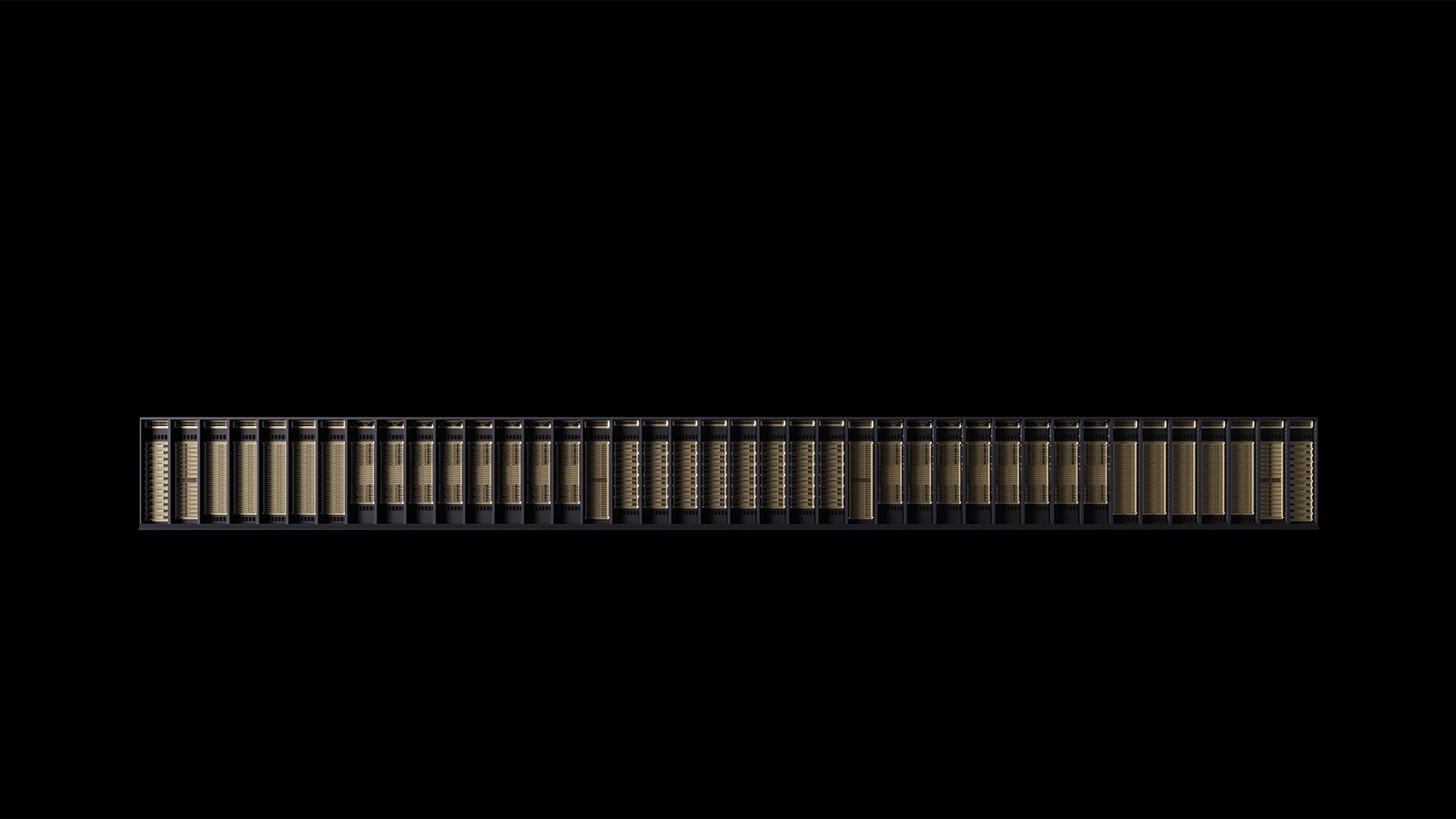
NVIDIA Vera Rubin at a glance
NVIDIA said the seven chips of its Vera Rubin platform, including the newly integrated Groq 3 LPU, are in full production, with Vera Rubin products from cloud and server partners starting in the second half of 2026.
What changed with NVIDIA Vera Rubin
On March 16, 2026, at GTC, NVIDIA said its Vera Rubin platform is in full production. It combines seven chips: the Vera CPU, Rubin GPU, NVLink 6 Switch, ConnectX-9 SuperNIC, BlueField-4 DPU, Spectrum-6 Ethernet switch and the newly integrated Groq 3 LPU. The Vera Rubin NVL72 rack links 72 Rubin GPUs and 36 Vera CPUs. NVIDIA claims it trains large mixture-of-experts models with a quarter of the GPUs needed on Blackwell and delivers up to 10x higher inference throughput per watt at one-tenth the cost per token.
NVIDIA also described a Vera CPU rack for the CPU-heavy environments that agents and reinforcement learning rely on, a Groq 3 LPX rack for low-latency inference due in the second half of 2026, and BlueField-4 STX storage for the key-value cache that long agent sessions create. Products are expected from partners including AWS, Google Cloud, Microsoft Azure, Oracle Cloud Infrastructure and CoreWeave starting in the second half of 2026.
Why NVIDIA Vera Rubin matters for businesses
Most businesses will never buy a Rubin rack, but they will rent its output through cloud and model providers. If NVIDIA's cost-per-token claims show up in provider pricing, running long-context agents and multi-step workflows should get cheaper.
Sources for this story
- NVIDIA Vera Rubin Opens Agentic AI Frontier (opens in a new tab)Official
NVIDIA Newsroom · nvidianews.nvidia.com
- NVIDIA GTC 2026: Live Updates on What's Next in AI (opens in a new tab)Official
NVIDIA Blog · blogs.nvidia.com
Last verified: . IA Compa summarizes public announcements for business readers. We are not affiliated with the companies mentioned. Always confirm details, pricing, and availability with the official source.
- #nvidia
- #ai-infrastructure
- #gpus
- #vera-rubin
- #gtc