AMD EPYC 9006 at a glance
AMD announced the general availability of its 6th Gen EPYC SP7 server processors on November 10, 2026: Zen 6 chips with up to 256 cores per socket, shipping in OEM systems and pitched at the CPU roles agentic AI creates — general services, GPU host nodes and agent sandboxes.
What changed with AMD EPYC 9006
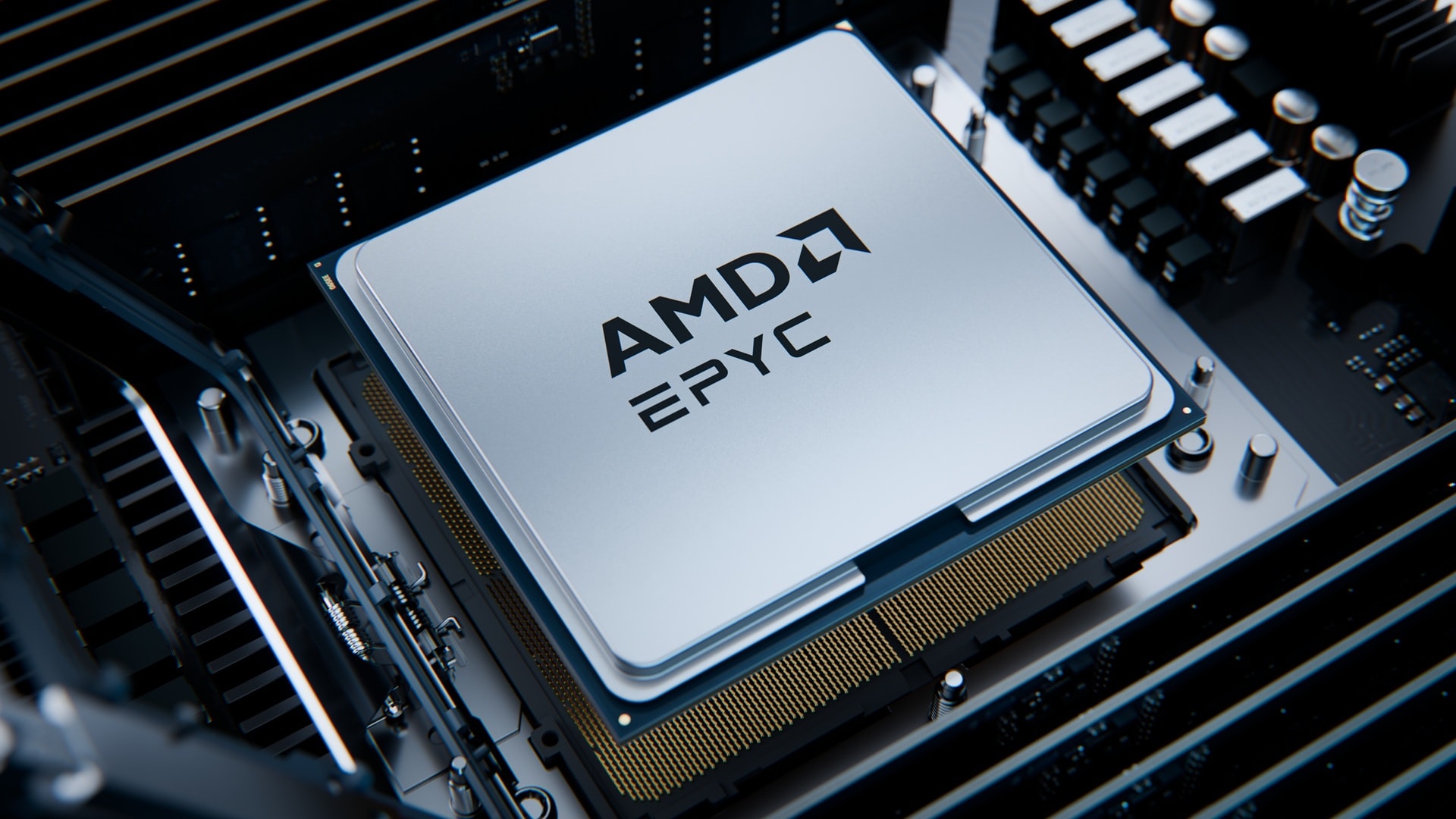
AMD announced the general availability of the 6th Gen AMD EPYC server SP7 processors on November 10, 2026, built on the new Zen 6 architecture and made on a 2nm-class TSMC process. The portfolio spans agentic AI, enterprise, cloud, HPC and general-purpose computing, with up to 256 cores and 512 threads per socket, 16 DDR5 memory channels and 96 PCIe 6.0 lanes on the SP7 platform. SP7 systems are shipping from leading server OEMs and ODMs, and AMD expects the chips to power cloud instances across the major cloud providers; recent Microsoft Azure and Oracle Cloud announcements showcase agent orchestration and concurrent agent sandboxes on the platform.
AMD organizes the line around three CPU roles in agentic AI: general-purpose services, GPU host nodes and agent sandboxes. Its high-frequency host-node processors boost to 5.3 GHz and deliver up to 1.8 times the LLM output in AMD's own comparisons, and its high-density parts give up to about 3.3 times the agents per CPU watt of NVIDIA's Vera CPU and about 2.5 times that of Intel's Xeon 6980P for hosting agent sandboxes — all AMD figures. Independent first tests landed the same day: Tom's Hardware measured a dual-socket EPYC 9996 server at up to 93% higher SPEC CPU 2026 integer throughput than the previous generation, with the 96-core EPYC 9686F ahead of NVIDIA Vera by 17% on integer and 40% on floating-point throughput.
AMD EPYC 9006 in numbers
Values are copied from the linked source on the date shown. They are not IA Compa measurements.
- Maximum cores per socketas of · Source for Maximum cores per socket: newsroom.amd.com (opens in a new tab)
- 256
- Agent sandbox density vs NVIDIA Vera (AMD)as of · Source for Agent sandbox density vs NVIDIA Vera (AMD): newsroom.amd.com (opens in a new tab)
- ~3.3x agents per CPU watt
- SPEC CPU 2026 integer gain vs prior gen (Tom's Hardware)as of · Source for SPEC CPU 2026 integer gain vs prior gen (Tom's Hardware): tomshardware.com (opens in a new tab)
- 93%
Why AMD EPYC 9006 matters for businesses
Why it matters: agent workloads spend much of their time on CPUs — running sandboxes, executing tool calls and orchestrating models — so the cost of running agents at scale is becoming a CPU question as much as a GPU one. Venice gives the data centers and cloud regions that agency agent stacks run on a denser x86 option, and AMD's agents-per-watt pitch is aimed squarely at the economics of hosting many concurrent agents per rack.
Get AI News by email
Verified AI stories, each with its official source, on Monday and Thursday mornings. Add breaking news to hear about the biggest ones as soon as we publish them.
Every story links its official source
Free, in English or Spanish
Unsubscribe with one click, any time
Sources for this story
- AMD Showcases 6th Gen AMD EPYC Processors to Lead Next Era of AI and Enterprise Computing (opens in a new tab)Official
AMD · newsroom.amd.com
- AMD Zen 6 EPYC Venice deep dive and benchmarking (opens in a new tab)Press
Tom's Hardware · tomshardware.com
Last verified: . IA Compa summarizes public announcements for business readers. We are not affiliated with the companies mentioned. Always confirm details, pricing, and availability with the official source.
- #amd-epyc
- #zen-6
- #server-cpus
- #agentic-ai
- #data-center
- #epyc-9006